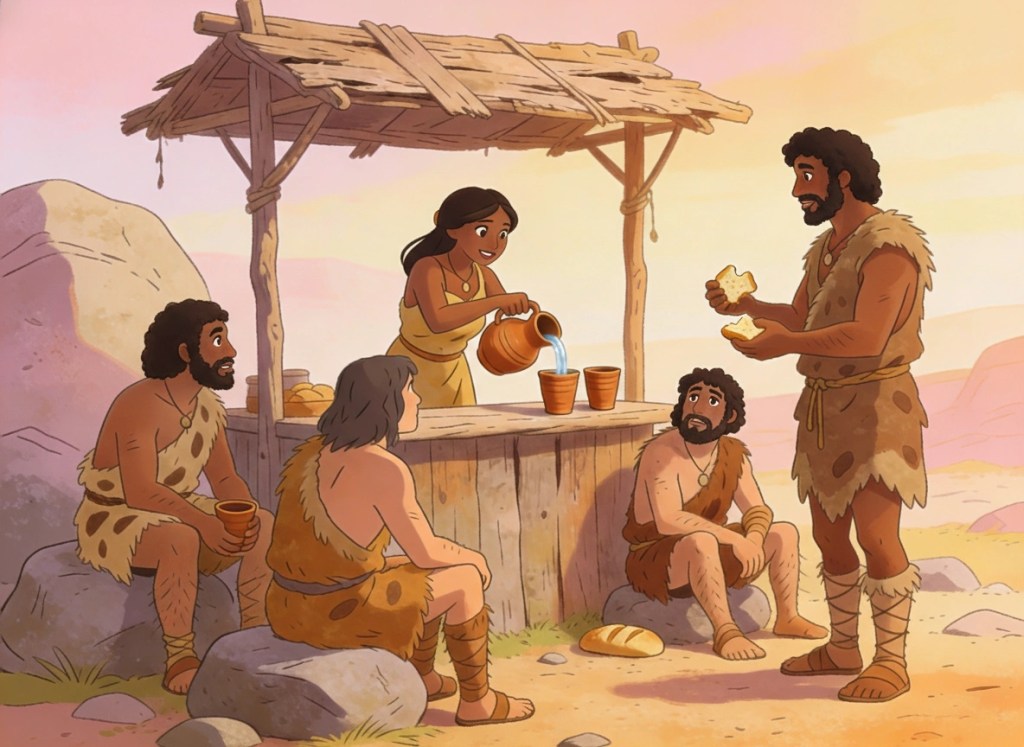
• The world I have envisaged at this point remains tribal and by extension familial. Besides inter-tribal marriage and mob mergers, by force or mutual agreement, even the largest villages had a generational lineage. After enough time these tribes would have something resembling a royal family. You know, the descendants of successful scoundrels. Okay, there probably was a few noble and worthy leaders (automatically passing it on to your kids is a whole other argument), but either way the upper and lower crusts were in place.

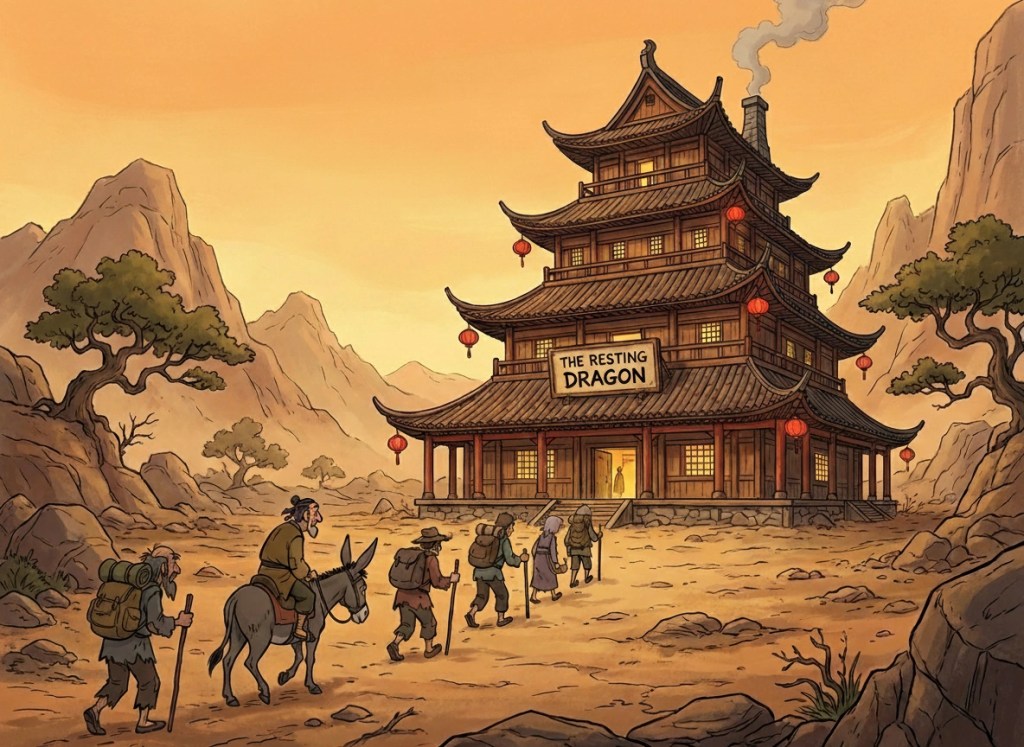
    Towns were a different kind of set-up. I’m pretty sure they weren’t created through conscious planning at first. Maybe they sprung up around a tavern or inn on a busy trade/pilgrim route. Some budding entrepreneur passed by a nice spot on a well-worn path between two villages and thought I can smell opportunity here. I sense an itch in need of scratching. For a fee of course.

    A meal, a beverage and a place to crash – bingo!

    Maybe the place gets so popular that other enterprises start popping up alongside. Gambling, women of the night and other forms of entertainment. An ancient version of a kebab shop or hotdog stand perhaps. I don’t know. What I’m getting at was that it wasn’t necessarily “build it and they will come.” My theory is that people were already going by; but the successful establishments made people change their route just to visit them. The towns sprung from these places when people started visiting for the sake of visiting.

    These places weren’t just for passing through anymore; they had become the destination. More traffic equals more merchants and bigger operations requiring staff. Some of those visitors decide to stay and my hypothetical town is born!
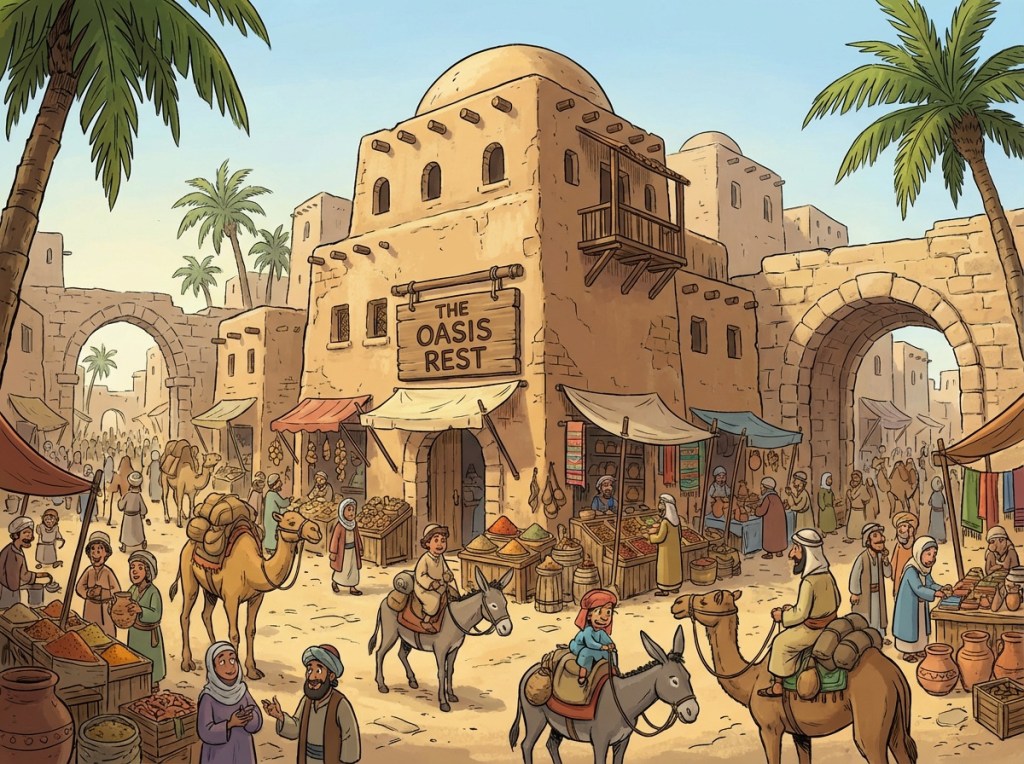
    An alternate idea could be something like a trading post situation. Prior to this, tribes and villages might meet and trade directly amongst themselves or with travelling herdsmen etc. – but there was no actual marketplace. Did this spring up outside a tavern or did the savvy seller set-up their tavern alongside the bazaar?

    Something similar may have sprung up alongside a large village, but I can’t believe the village aristocracy would give it the green light without a nice kickback – maybe the first business tax or racketeering scheme, depending on how you look at it.

    While this could hardly be called the good life, things were looking up for the species as a whole, especially if you were one of the prosperous merchants or village aristocracy. Of course, everyone was susceptible to disease and ill health. After all hygiene, nutrition and medicine were literally ancient. You could die from a fucken splinter! The poor still starved and froze to death, I’m sure. However, the upper crust they were looking damn good for the era.

    Maybe for the first time, this group of people now had an added threat to replace the peasants’ perils – other humans. Now, murder was not a new thing, and crimes of passion are as old as the species. Vengeance for betrayal or maybe a misappropriated cow. Jealousy and envy are intrinsically human.  However, in these times of haves and have nots, homicide as a means to expedite an increase in wealth or status would be popping into the heads of many an aspiring social climber. I’m getting ahead of myself again.

    Let me just pause and see where this realm of mine is at this point:

    • We’ve got small, settled tribes all the way up to big ass villages.
    • We’ve got nomadic bands of hunter gatherers, herders and thieves/raiders.
    • We now have towns springing up one the edges and in between villages.
    • With those we can now add wandering entertainers, merchants, charlatans, craftsmen and tradesmen.
    • We may probably expect to find the earliest manifestation of the backpacker: a traveller, a pilgrim or maybe a wandering bum – depending on your point of view.
    Well, there you go. This is all coming together nicely. Which undoubtably means that it is wrong, but I intend to follow this line of reasoning to the present and beyond, so if you’re still on board we will move on.

    Next, we are getting really big. We are entering the domain of cities and empires!
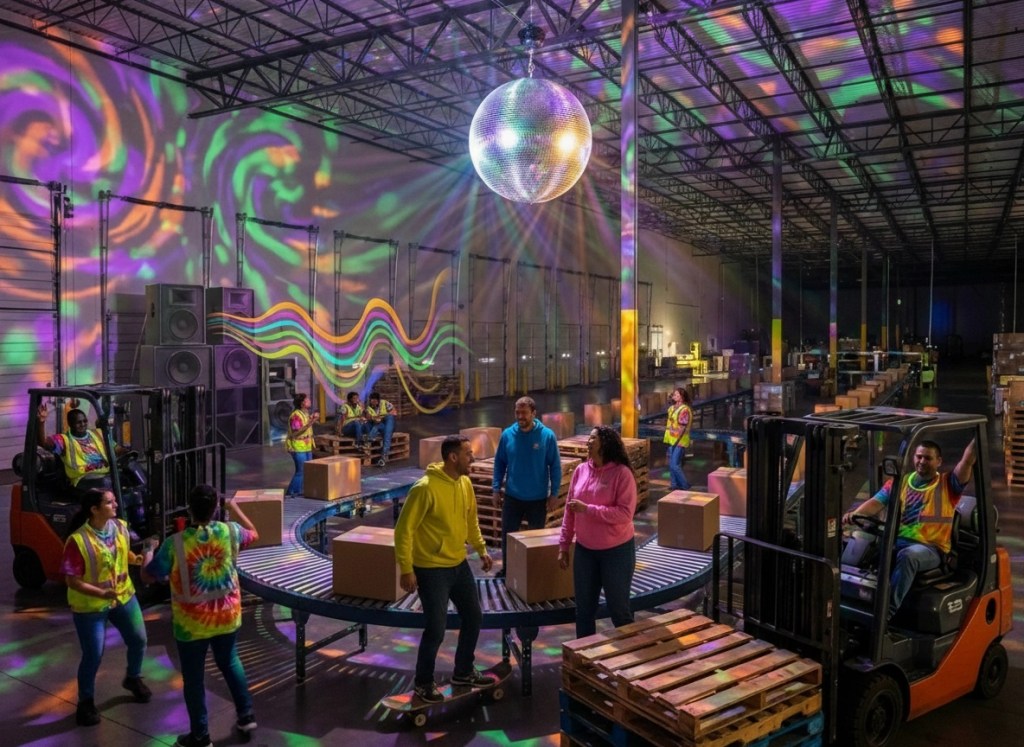
  • In the late 1990s I worked for a magazine distribution company that will remain nameless. I was in my mid 20s and a weekend binge drinker like all my mates. I often credit this job for tipping me over the alcoholic edge. I’ll leave that downward spiral for another day. At this point it was party time!

    My cousin had got me the job, and his mother (my fun auntie) worked in the offices upstairs. She was already a high functioning alcoholic, and my cousin enjoyed a drink more than I did. I was amazed at the antics in this place.

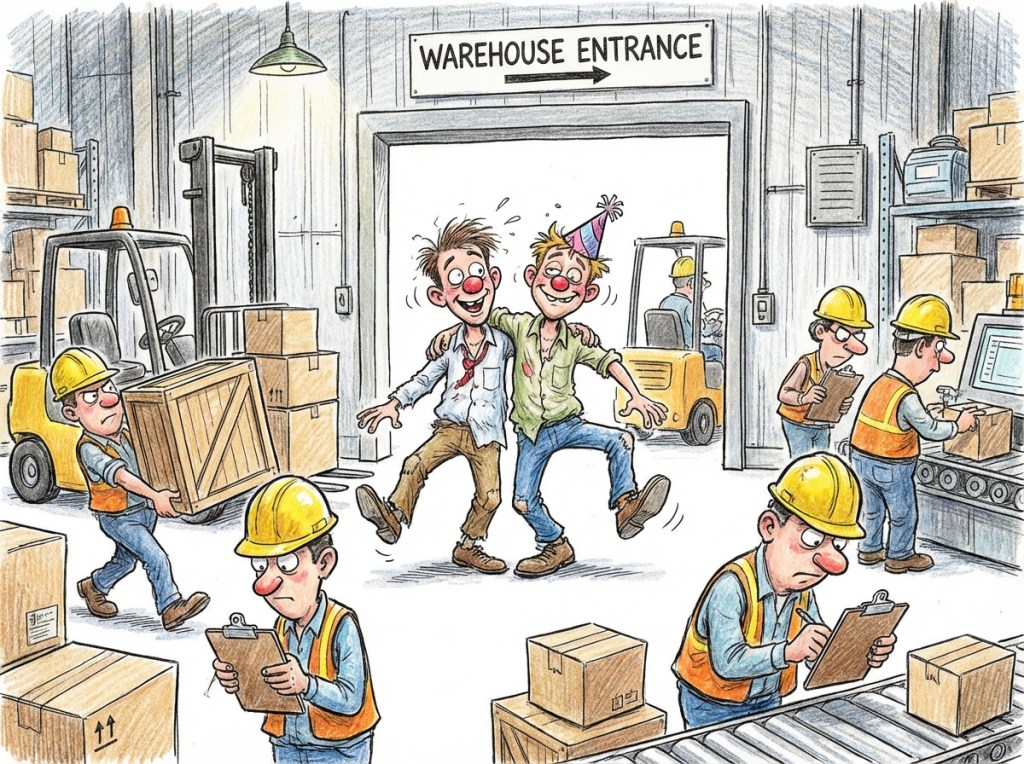
    At lunch time a group of us would walk up to the pub and drink. Another group would head to the car park and sit in their cars punching cones – smoke billowing out the windows. The old ladies usually sat around outside smoking ciggies. I’m sure there were other people not frying their brains (wierdos) and there were occasional days when most people abstained (maybe not the potheads though).

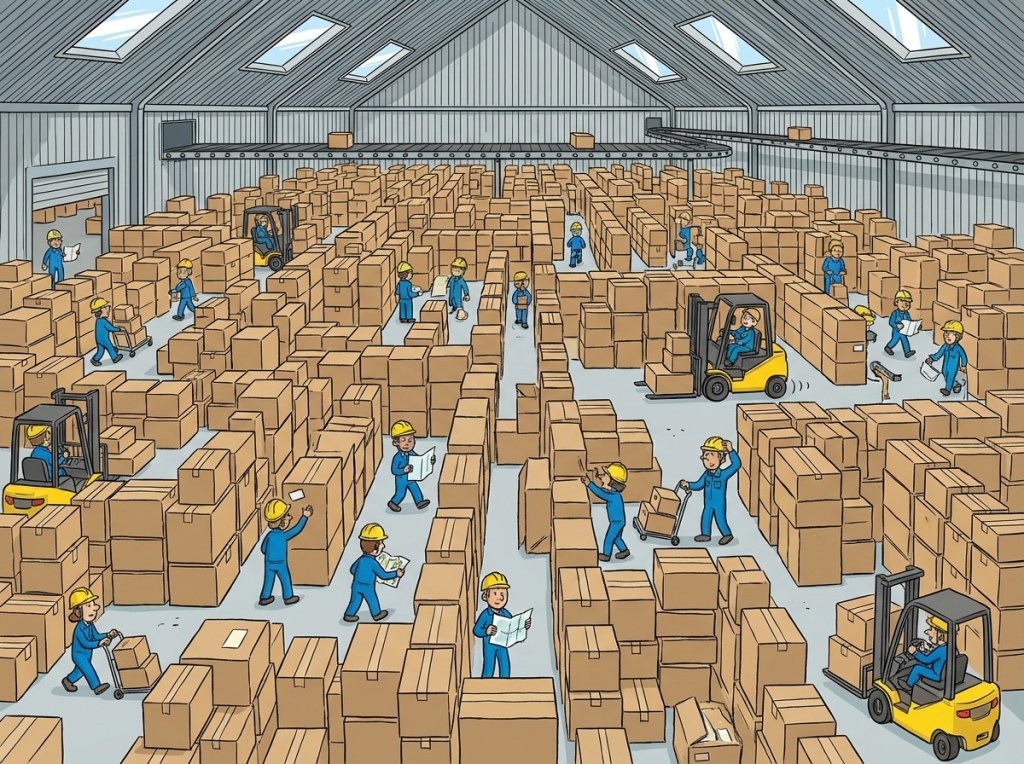
    After lunch we would all head back inside and proceed to work with strapping machines and conveyor belts. Several bleary-eyed people would hop on their forklifts and continue the shift like normal. I do not recall anyone saying anything about this being odd.

    My cousin had even perfected the most efficient way to drink during the break. I forget now, but it was along the lines of “you buy a schooner of beer and two shots of bourbon, each in a glass with ice. You get a small bottle of Coke and that saves you having to waste time going back to the bar”. At the time I thought he was a genius – maximum efficiency!

    When we got back to work the radio would be a bit louder and the pub people would have a little extra bounce (and maybe slip) in their step. The car crowd would all have that cheesy grin on their faces. I have a clear memory of the first week I was there. The belt had stopped, and one young lady took the opportunity to jump up on it and start dancing. The reaction? Well, the radio was turned up of course and other people started joining in.

    The only time I can recall the supervisor being pissed off was when my cousin and one of the older blokes didn’t come back from lunch at all. It was raining that day and nobody could be bothered driving, but these two weren’t missing their lunchtime beverages – did I mention it was a Friday?

    As the afternoon work commenced it soon became apparent that two forklifts were unmanned. Everyone knew where they were, but the supervisor was optimistic (on a Friday?). After a little while my cousins’ fiancé, who worked in the downstairs office came over and handed me a cordless phone from the office (yes mobile phones were a rare thing back then).

    It was my cousin of course asking me to grab their bags after work. They knew I would be heading straight up there to join them anyway. The supervisor calmly took the phone from my hand and told them what he was thinking. He was such a cool supervisor. There was no hostility, it was the “I’m disappointed” tone.

    The other pisshead procedure my cousin introduced me was the before work drink. Sometimes when it was very quiet and there was not much work, we would be given only 4 hours work on staggered shifts. The last shift was something like 12:45pm. That was like a red flag to a bull for my cousin. He informed we would be meeting at the pub before the shift, as if it was the most natural thing ever.

    Other booze hound pearls of wisdom my cousin imparted:

    Him: let’s go to the pub

    Me: It’s only 11 AM

    Him: would you like a beer?

    Me: yeah, but-

    Him: then let’s go. Why do people have these bullshit set times to start drinking?

    Watertight reasoning.

    Last one

    Him: Let’s go to the pub

    Me: It’s Monday arvo.

    Him: So?

    Me: Fair enough.

    I worked at that place for two years and there was only one injury, and I am almost certain the two guys involved were blood tested and must have passed. Nobody was sacked and the injured dude got his compo. That’s fucking incredible! 2 years of intoxicated antics and only one casualty who was probably sober at the time. Oh, and the actual workplace was an OH&S nightmare itself.  More on that another time.

  • ***Massive Cynicism Alert***

    Things are looking pretty grim for anyone not willing or able to keep up with the accelerating changes, or for those that invest their precious time and energy on the wrong potential source of income. The profit hungry behemoths do not possess sympathy for those that do not generate wealth.

    Notice how I refer to the corporations themselves rather than the people who supposedly run them. For those who don’t already know this frightening fact: in most countries a corporation has the same rights as a natural person. Who owns the corporation? Investors of course. What do investors want? Profit. The people who manage the corporation are not the owners. They work for the investors – do you see the perilous lack of humanity?

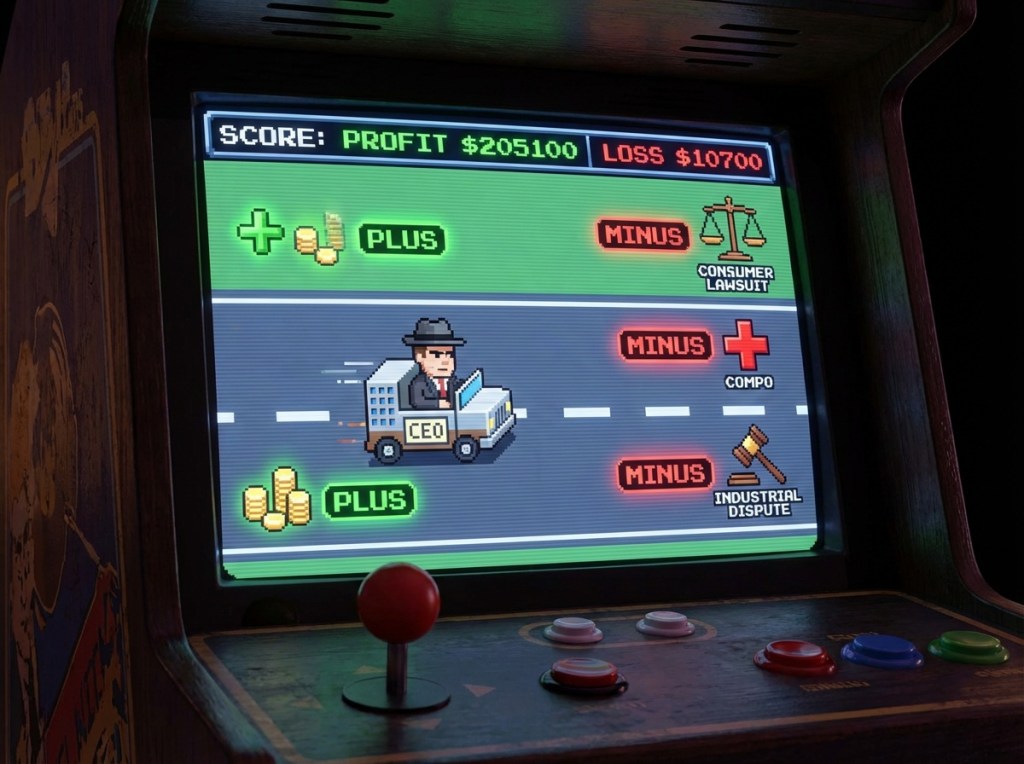
    The highest person/s in the corporate hierarchy MUST make profits. If they fail, they will be replaced. They almost always get a nice golden handshake for their efforts anyway (nice that) and they will probably end up in another corporate executive position. They live and mingle with the highflyers. Therefore, if you find yourself in this ridiculously high-paying circus you are (if not already) very soon going to be very far removed empathetically from the working slobs at the bottom.

    There is a truly horrific rabbit hole here that I have cut and pasted for a future post. Let’s not gaze into the abyss too far too early.

    The point I am trying to make is that the CEO we see in the media is not the boss as in the owner of the business. He or she is the servant of the profit machine. The investors put their money in and if the machine is not paying out sufficiently, they will move on to the next one. I am not trying to garner sympathy for the poor suffering CEOs and top executives. I am merely pointing out the futility of appealing to their compassion. If one of these cronies dared sacrifice profit to soothe their conscience, they would be replaced quick smart.  It truly scares me to think about!

    So, we have established that profit is the paramount concern for the faceless behemoths we call corporations. Comin in at 2nd place would be the customers. They are important only because they are where that beautiful bounty comes from, but just like any other exploitable resource they don’t ‘matter’ in a human sense. Oh yeah, I mean we need to satisfy them of course, but if we can use marketing to mislead them into believing that satisfaction comes from whatever crap we’re peddling that will do just fine. The gist of customer relations to me seems to be this: get the maximum amount of money and try to ensure they keep coming back – to this aim we must respect our need for them and at least make it look like they are our number one priority.

    Running a very distant 3rd come the workers – “those fucken pests!”

    “I need more money”

    “I need to take a break”

    “I need to see my family and friends”

    “I need to eat, I need to sleep, I need to take a piss/shit”

    “Your unsafe equipment has severed my arm. I need an ambulance”

    The sooner we can smash the unions and weaken the labour laws the better. Barring that we should outsource as much as we can to countries with more corporate friendly industrial relations legislation. Best case scenario we replace those unreliable whinging flesh and blood assets for machines.

    The top brass may or may not share this sentiment; although if you play the game at this level it would grow on you, I’m sure. If you do not make profit and ‘continue to do so’ you have failed! If you do not like the rules of the game, leave. Feel free to sympathise with the plight of the people on the floor, but if your attempt to improve their conditions results in a loss of profit – au revior.  This is not a vendetta against humans, it is simply cold, calculated profit driven economics.

    There are of course public relations benefits to making your business look like a worker friendly environment (see THE COMMERCIALISATION OF CHRISTMAS: 2 SANTA FILMS 40 YEARS APART: Movie Musings #2), and of course it is extremely bad for business to be carrying a large number of unproductive and medically costly injured workers on restricted duties. An insurance premium nightmare! An actual workers compensation payout? DISASTER!!!!!!

    I will end the rant there and try to post something a little lighter for the next one.

    Please prove me wrong in the comments and give me a little hope.

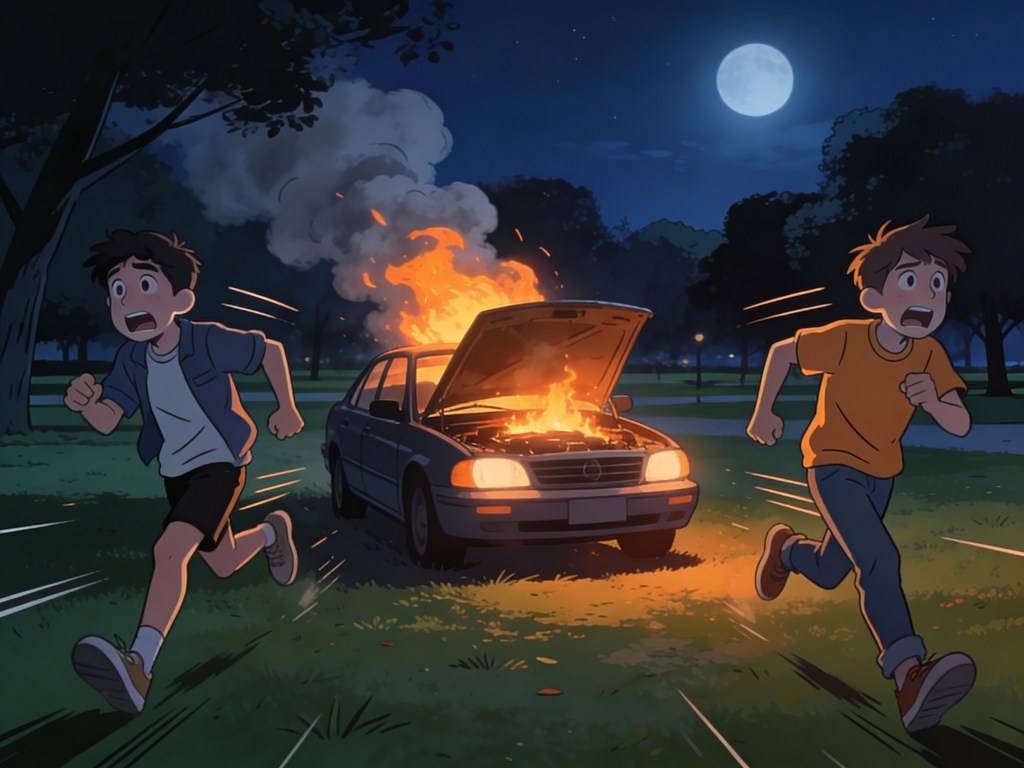
  • I don’t know where the car came from, but it was copping a hammering in the park. My mates were taking turns thrashing it around the large reserve. I ended up in the passenger seat while Rob was taking his turn. He was spinning it so hard that grass was coming in through my window and hitting me in the face.

    He ended up spinning it out and stopping not far from where everyone was standing. We could see Ed running towards us waving his arms above his head. I had to stick my head out the window to hear what he was yelling.

    “The car’s on fire! The car’s on fire!”

    I just remember yelling “Run!” and jumping out of the car.

    I ran over to where everyone was gathered and Rob was close behind me. We turned to see the front end of the car smoking and burning. There was no explosion like in the movies and the fire slowly simmered down so I don’t reckon we were in that much danger. It was actually kind of a fizzer really. Nothing substantial actually happened, so this one is probably one of the least exciting stories in the series.

    However, the fact still remains that Rob had thrashed a car to the extent that the motor actually caught on fire and I was his passenger. There was undoubtably alcohol and pot involved. Any number of horrific things could have happened and my imagination reels with potential injuries or death. Luckily it ended well and we all moved on to the next stupid activity we could participate in that might maim or kill us.

  • Glory Days of Home Video #1

    I grew up during the dawn of home video players and video rentals. (in my old man voice)” Young people today could never appreciate the massive advancement home video was at the time!” Before that the only way you could see a movie was at the cinema (or Drive-In) or on television.

    Television had stricter guidelines around profanity, sex and violence, so chances are if the movie you watched had any of that stuff it would be cut out, and often rather shabbily as I remember. Just think, if the film makers deliberately wanted to conceal any of the ‘mature content’ they would work it into the scene. For television some editor gets a list of what needs to be cut, and they just have to get rid of it. I can remember laughing with friends at school about how stupid some cuts looked.

    In Australia in the late 70s and early 80s there were 5 different ratings for movies

    G – General viewing: kids shows or family friendly stuff.

    PG – Parental Guidance Recommended: a little bit of the darker and dirtier stuff (I remember the cinemas having a different one for this. NRC – Not Recommended for Children).

    M – Mature audiences: this was where most of the action, horror and raunchy comedies or erotic stuff was. I’m sure we never had a problem getting into these ones as kids.

    R – Restricted Audience: no one under 18 allowed: pretty much the same kinds of content as the M rating, but with more freedom to push the envelope.

    X – The Shady Rating: Basically porn. The line between porn and erotica is definitely a post of its own. This stuff was not shown at the regular cinemas (that I am aware of).

    Television never showed anything above an M rating and most of those movies were cut to bits. An R rated movie might have big chunks missing – sucked hard! The only way to see the ‘real’ movie was at the cinema. Do you see the frustration for the kids? We could never see an R rated film!

    “That’s not true” I hear you say condescendingly. I ask you to recall the perceived distance between the ages of 12 and 18 when you were 12. With that aside, remember that the only way to see the uncensored version of an R rated movie was at the cinema. Movies have limited run times and once they were gone it was pretty much it.

    We didn’t really have any theatre houses showing old movies in Sydney that I knew of. I am always amazed when I see the US 42nd street style cinemas that just pumped out all kind of old and obscure movies non-stop – heaven to any film lover! When I was young (there it is again) you might catch an old movie as part of a double feature or a late-night screening in the cinema or as the ‘other’ film after the feature at a drive-in, but that was it.

    When a movie had run its course at the cinemas it went into mothballs until some arbitrary time period had passed (it seemed like years) and then it popped up on Television. I remember the disappointment of seeing a movie I had really wanted to watch in the TV guide and that fucking disclaimer in brackets beside the title (modified for television) – fuck off!

    Let us not forget the ultimate pain when watching a movie on television – fucken ads!!! Just like the uneven editing of censored content, the ads just interrupted the movies at intervals the viewer was never sure of. Mercifully a little care was taken not to cut to commercial in the middle of a scene, but it still ruined the flow of the whole experience.

    TV series writers had fine-tuned the art of leading into commercials. They would always try to have some type of intrigue or exciting incident to ensure the viewer was keen to keep watching. Film makers did not need this and therefore the pacing was used very differently. TV companies need to have so many commercials shown during the movie and they’ll squeeze them in no matter what – rhythm be damned!

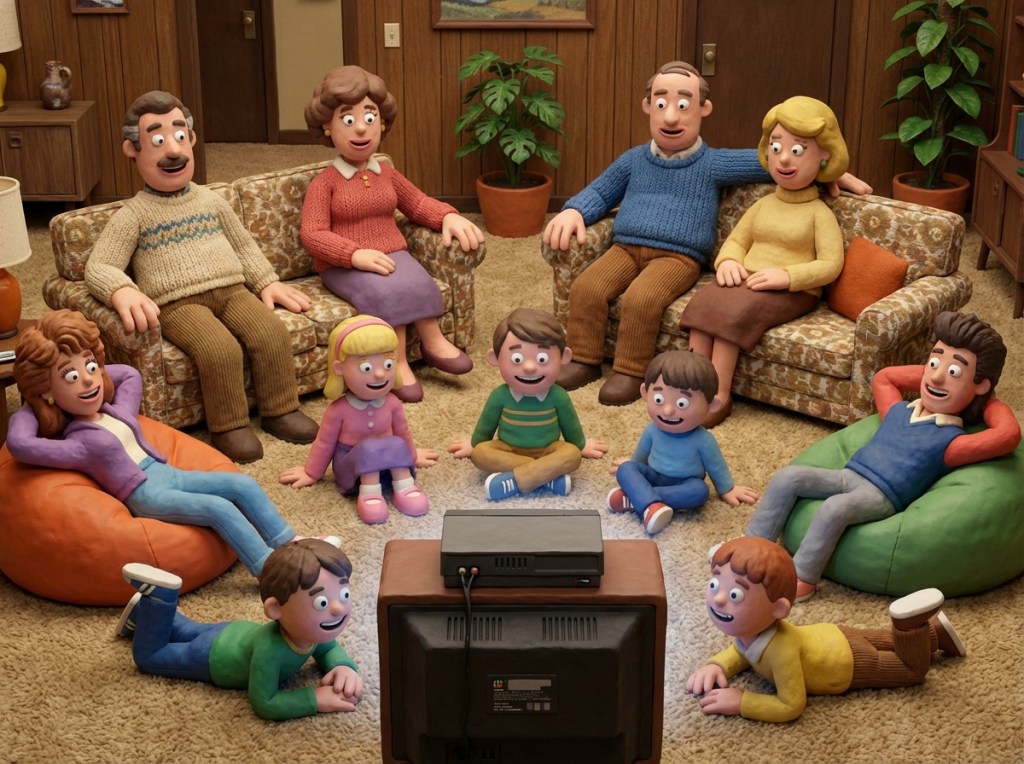
    Home video – you little box of magic. It opened up the whole world of cinema in a way only the super-rich with their own private theatres could experience. Okay most of us were watching films made for the big screen on tiny pissweak television sets, but it didn’t matter to us. We were watching full, uncut and uninterrupted movies in the loungeroom; and if we wanted, we could rewind it and watch it again! Fantastic!

    In the beginning these little beauties were very rare so people would go to the house that had one and find a spot – kids were usually on the floor. In the very early days, the offerings were quite limited, so the tapes rented could be quite eclectic. “Okay we’ve got The Wizard of OZ, Friday the 13th & a Marx Bothers movie”. We loved it.

  • Blue collar work isn’t very intellectually demanding, so there’s plenty of time to ponder. I’ve always been a nerd, but university was never on my radar. I didn’t enrol until I was in my late 30s – that’s another thread and one I will be eternally grateful for.

    Anyway, this sideroad concerns all the contemplation that took place, and is still taking place, while I go about earning a quid. More precisely it is about the reflections that flooded my mind regarding the job I was doing at the time. Call me a forkie philosopher. You know like “yeah, I know this is the job, but why is the job?”. I often irritate my coworkers.

    A funny side to that is that I ended up studying philosophy as an adult and a joke I encountered many times was: “I studied philosophy…would you like fries with that?”

    So, without further ado, I would like to present a poem (sorry) written by a pisshead forklift driver working for a company that was overwhelmed by stock – excessive overtime was the norm – good money but exhausting if you were one of the foolish ones actually working hard. Feel free to call me a foolish philosopher too.

    This was over twenty years ago (note the DVD reference and I’ll tell you those TVs were the heavy, bulky ass ones). Long before I had a degree in philosophy and literature and therefore knew I should not be writing poems, I felt a yearning to express my bewilderment (to whom I have no idea). Ladies and gentlemen, a verse penned by a hungover, depressed, angst riddled man whose idea of a poet was Jim Morrison (at least I had the pisshead part right).

    SLAVES

    We are all slaves.

    Slaves to other people’s greed.

    More, they want,

    More,

    Always more.

    Never enough.

    The stuff comes in,

    We ship it out

    But still they want more.

    More TVs,

    More DVD players,

    More fridges.

    The bosses want more

    More customers,

    More freight,

    More money,

    It’s better for us all they say.

    Don’t you want the overtime?

    When they have it all.

    They want newer stuff.

    The latest DVD player,

    A bigger fridge,

    A better TV,

    Something else.

    So we ship it out.

    We get the overtime.

    We get the money.

    So we can buy stuff.

    TVs, DVD players, fridges

    Don’t you want a new car?

    Thank you for indulging me. I hope you get the gist of what this tangent will be about. Corporate confusion through the eyes of the grunts on the floor – the overthinking ones anyway – or one overthinking one – you get it. Also reckon here’s where I’ll throw in those true stories I have collected after 33 years in the workforce – names and businesses will be changed to protect the negligent and the lazy.

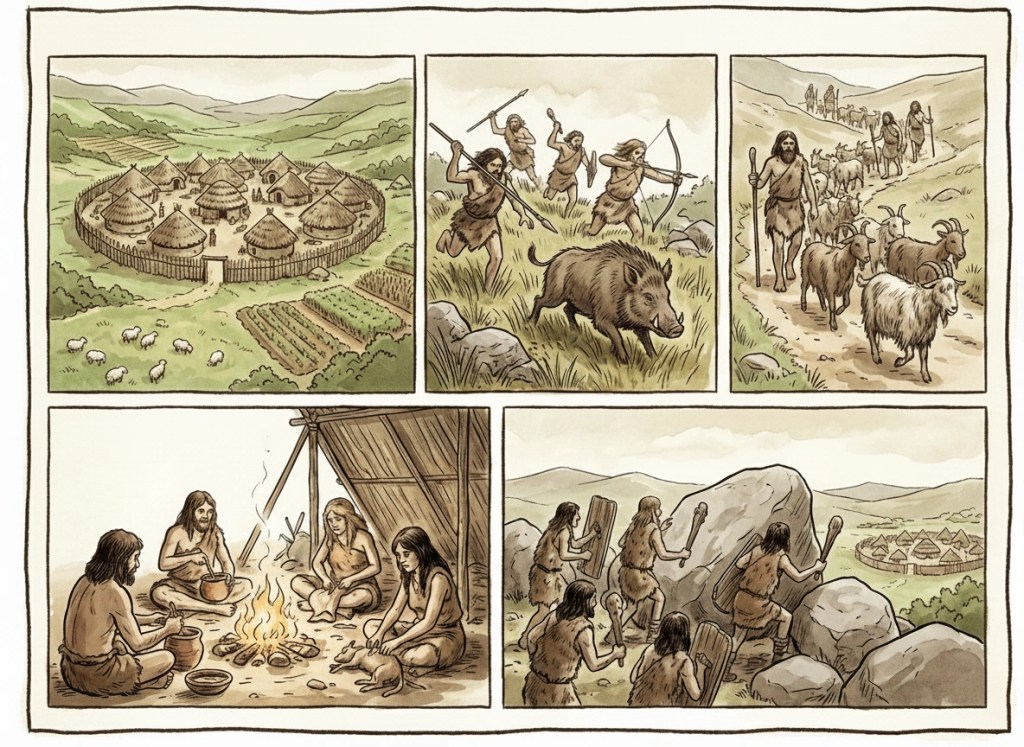
  • Before the rise of the first great empires there must have been an era of nothing larger than a great village. Some sliver of time before towns became a thing. Nothing but a spectrum going from hunter gatherers and/or nomadic tribes through fledgling farming communities and peaking with a scattering of big ass villages. I have no evidence to back this up of course.

    When I write hunter gatherer I am referring to one type of nomadic tribe. I highly doubt these smaller clans would tie themselves down to one particular spot. It’s not like they had deeds and titles. Not much action here? Time to move on. After successive generations they end up with a kind of migration pattern in which they follow the game and find the best places to survive the weather conditions.

    After farming became a thing there would have emerged tribes of mobile pastoralists. Obviously, you can’t move your corn plantation, but many chose to keep their cattle on the move. Using their generational knowledge and literally moving to greener pastures when the time came. Eventually this would progress to moving them from village to village for trading.

    Each lifestyle would have their own unique pros and cons. For instance:

    • Nomads travel light and have fewer numbers
      • They can quickly head to safer ground if disaster strikes
        • But they are more exposed and vulnerable
    • Villagers spend a lot of time in one area and have much more members
      • They can build defences and have strength in numbers
        • But if disaster strikes, they must try and defend what they have worked so hard for. Even if they bite the bullet and flee, they would be much slower.

    Call me a dreamer; but I like to imagine this as the time before war. Of course there was conflict (humans remember), but there was nothing people were so jealous of that they were willing to go all in with a ferocious fight to the death. There would have been rivalries and revenge attacks, a lot stemming from theft (that would shockingly include women and children I’m told), and there would have been atrocities committed in rage or to send a warning. However, without hard and fast property there was less incentive for out and out war – a blood feud might come close I suppose.

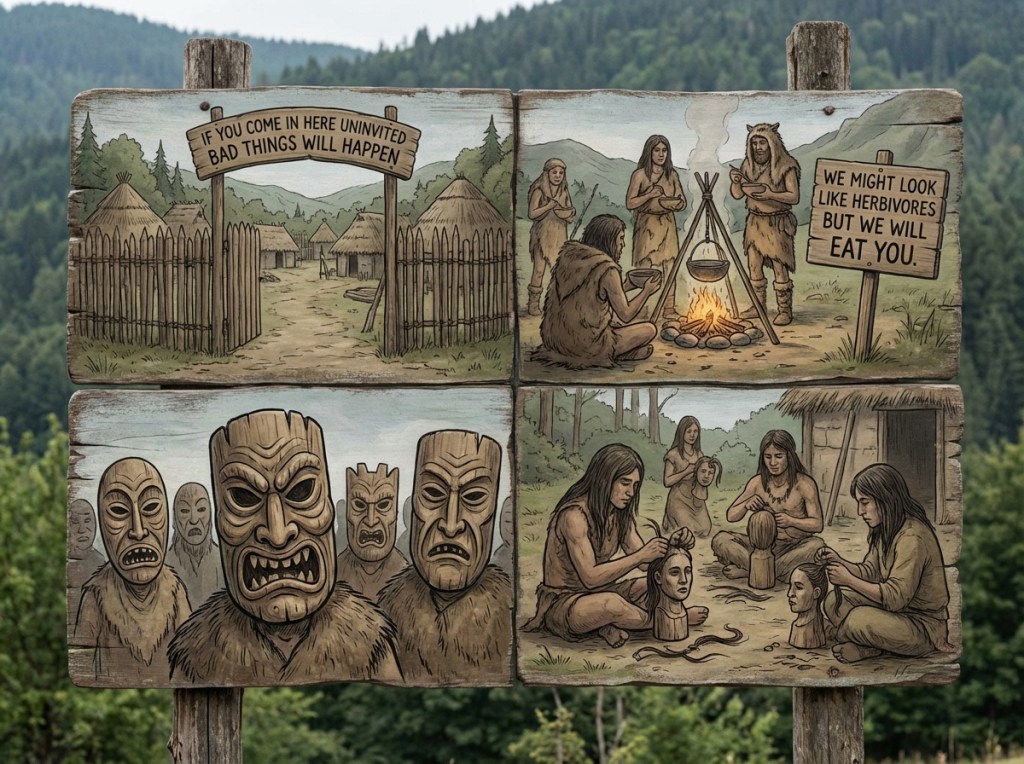
    Certainly, it would be important to let it be known your tribe won’t be fucked with – this was the literal law of the jungle after all. I reckon this is where a lot of the cannibalism and headhunting shit came from. Don’t mess with that mob they’re fucken bonkers! There wasn’t strict border enforcement outside of the more inhospitable villages, but there sure as hell was suspicion and fear of outsiders even among travelling tribes.

    Sadly, the tribes who were too trusting didn’t last that long unless they got themselves really secluded. All the rest were either the original villains or had been burned enough times to know you need to watch your collective asses out here.

    During this early stage I am suggesting that the OG pillagers would have been nomads. They didn’t invent it, but I suspect they were the first to make it an actual tribal mission statement: “why toil when you can take?”. Lessons passed down to the young’uns would have been things like:

    • Travel light, travel fast
    • Take what you need and move on
    • Don’t get weighed down with want (that’s one I thought of for the wiser plunderer)
    • Don’t be predictable
    • Stealth is good for your health

    You get the idea. They probably had it printed on a tea towel or something and passed it from father to son. Not a bad rort in a time with no law and order. Of course, these raiders were small potatoes compared to the wholesale annihilation and subjugation that was to come, but villainy must start somewhere. These guys will be remembered by history as petty criminals in comparison to the warlords of the future (their future, not ours).

    “Kill one man, and you’re a murderer. Kill millions of men, and you are a conqueror. Kill them all, and you are a god.”

    Jean Rostand

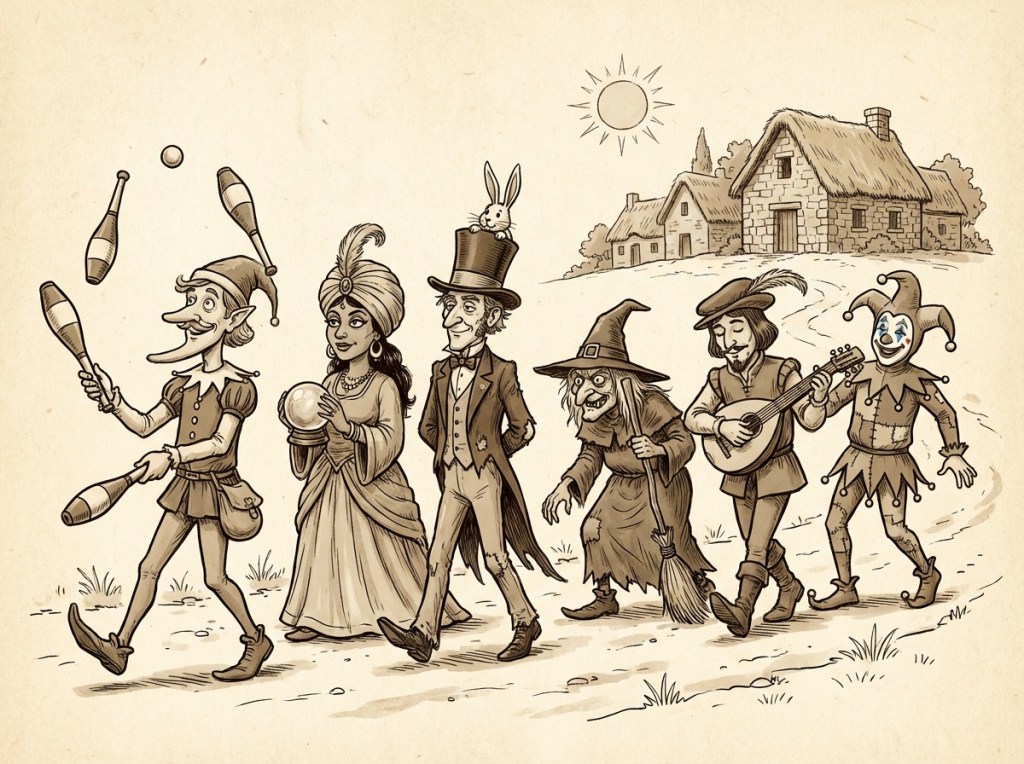
    The only other nomadic variety I can think of (besides vagabonds) would be the wandering entertainers and bullshit artists. Singers, musicians and storytellers along with soothsayers and all types of magicians and mystics who didn’t want to do ‘real’ work and didn’t have the stomach for crime. Travelling merchants probably didn’t find a market until there were actual marketplaces.

    That’s my segue to the next level before empire (in my imagination that is). Towns. These differ from villages in that the community is not inherently connected. In my neatly delineated presumption this is where all the wanderers come together and combine their various skillsets to try and create a ‘village’ without a ruler – or something like that.

  • This one is a double bunger.

    Legend has it that Bon Scott, the original front man for AC/DC, died by choking on his own vomit after a heavy drinking session. I cannot positively confirm if this is true, but I can assert that it nearly happened to me on two occasions. One was at the very beginning of my binge drinking era and the other was at the very end.

    The first was at the tender age of around 16. It was my mother’s birthday and all the adults were up the yard drinking away. Us kids were all in the kitchen sneaking drinks from my mother’s cask wine. It was sitting on a shelf and we were getting underneath while someone held the trigger so the wine would pour down our throats like in the cartoons; sculling warm red wine “mmm delicious”.

    Somewhere along the line I had had enough and I went to bed. My memory is (of course) very fuzzy of what happened next, but I clearly remember spinning out at the TV because it was showing that trippy ‘Rage’ intro on the ABC. I am certain I was alone in there when I crashed.

    I awoke to the vomit gurgling in my throat and sat up instantly (Bon Scott demise luckily avoided). I was set to make a mad dash to the toilet when I noticed that a mattress had been laid out beside my bed blocking the doorway. My little cousin was sound asleep and I had no intentions of trampling her on my rush to the crapper; so I did the only thing left to do: I puked all over my blankets, tossed them aside and rolled off the bed on the opposite side from my cousin, where I promptly fell back asleep.

    I can remember the door being opened and hearing some of my other cousins talking about the stench of vomit and how I had just slipped off the bed and went back to sleep. Interestingly I don’t recall anyone coming to check if I was okay. Remember they would have all been drunk too. Anyway I survived my first near ‘Bon’ death experience.

    The next time this happened I was 30 years old. I had been drinking and betting on horses all day down at my local bowling club. When the races were over, one mate (Nathan) and I decided to continue on to the Oktoberfest celebrations down at the Concordia Club.

    After a solid day and night of drinking (and not much eating) I staggered home to my granny flat. It was quite chilly so I did what I normally did on such occasions. I would sit on the floor in front of my couch with the heater going and watch some TV while the room (and my icy mattress) warmed up a bit. I was probably watching Rage again.

    I must have fallen asleep and with my head rolled backwards I was in the perfect position for a ‘Bon Scott’ death vomit. Fortunately I awoke in time (again) and proceeded to vomit all over myself and the heater. Disgusting as it was it was still a lot better than death.

    I remember tossing my clothes in the laundry sink and trying to mop up the puke from the floor. The worst of it was baked onto the heater.

    The next day I had to face my mother and uncle who was down for the weekend. I was so ashamed of myself, but the knowledge of my close call with the grim reaper struck a very loud chord with me. That was the exact moment that I knew I had to cut out my alcohol abuse.

    To this day I very rarely drink myself into a drunken state and I have never been ‘shitfaced’ since. I still enjoy a beer, but I will never get that wasted again.

  • Pump Up the Volume (1990)

    ***SPOILER ALERT***

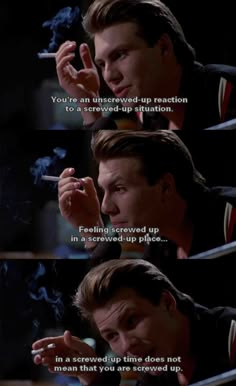
    Hard Harry is the alter ego of Mark Hunter, a high school student in small town America. Mark is an intelligent introvert who goes about not being noticed. Hard Harry is the rebellious DJ of a pirate radio station who tells it like it is. The station theme song is “Everybody Knows” by Leonard Cohen (the first time I ever heard him), so you get an idea of his outlook on things.

    Harry becomes an enigmatic symbol for the disaffected youth in this little town. As his popularity grows the parents and teachers decide he is a bad influence that needs to be stopped. You know the story: Every angry, angst riddled generation produces a bunch of variations on “Hard Harry”. It keeps being repeated because it strikes a raw nerve in this demographic, but this is not a critique of that formula.

    I will just say that this movie resonated with 17-year-old me. The cynical, yet compassionate Harry hit a lot of contemporary issues home. Harry’s anonymity gave Mark the courage to express himself in a blunt and vulgar way that a lot of teenagers would love to do – hence the loyal listeners.

    Eventually the uptight old fogeys (that’s probably my generation now) close in and capture the young upstart – the bastards! As he is being loaded into a police van, he turns to his adoring fans/peers and yells “talk hard!”. A battle cry for the youth to stand up and be counted! To not be silenced by the tight ass older generation.

    As the screen fades to black we hear a flurry of voices as students introduce their own pirate radio shows. The last thing we hear is a female announcing, “turn on the truth!”. The revolution has begun!

    Or that is what we’re supposed to think. Even at 17 this never sat well with me. So what happens now? Every Tom, Dick and Harriet is going to spout their own ‘truth”? Is anyone going to listen? Or is this gunna deteriorate into a screaming match? This was 1990 remember, so access to equipment to run a pirate radio station places severe limitations on who can pull it off, but still the idea fell flat with me. So only people wealthy enough to do it would get to “talk hard”.

    Just one more thing before the internet comparison. Hard Harry was fucken good! He was cool and thoughtful at the same time. His message was rebellious, but not totally anarchic. Hard Harry 2.0 could turn out to be a nihilistic agitator who wants to watch the world burn.

    Okay, settle down. The most probable outcome would be all of these ‘inspired’ youths get on their mics for a while and realise they haven’t really got that much to say after all. Or if they do, they could find that nobody wants to listen to them. Once the medium becomes saturated how do the new and improved Harrys or Harriets get heard over all the noise?

    It was a good ending if you didn’t overthink it, like so many movies. I suppose it is harder to let go when you really enjoyed the movie. Or maybe when you went with it at first and the awkward questions just popped into your head days or weeks later; almost like “hey, they fucken tricked me!”

    So here we are 35 years later and anyone with a few simple gadgets can launch their own, so much more advanced, pirate radio station. A YouTube channel, a podcast (audio with or without video) and a multitude of other options. Never before have so many people had so much to say!

    Sure, a lot of people are just having fun. Others have created awesome communities talking about something really niche and connecting people who thought they were ‘the only one who was into that’. Then there are the rabble-rousers. Those that love to stir the shit pot. Some are pushing an agenda; others just enjoy the instigator role.

    I can hear that final line of the movie “turn on the truth!”. It captured the spirit of Hard Harry so perfectly and it was unmistakenly meant to be a galvanising declaration. A few days or weeks later though even a 17-year-old me had an inkling of the way that inspired proclamation could become perverted. A feeling of elation subtly being tainted by unease.

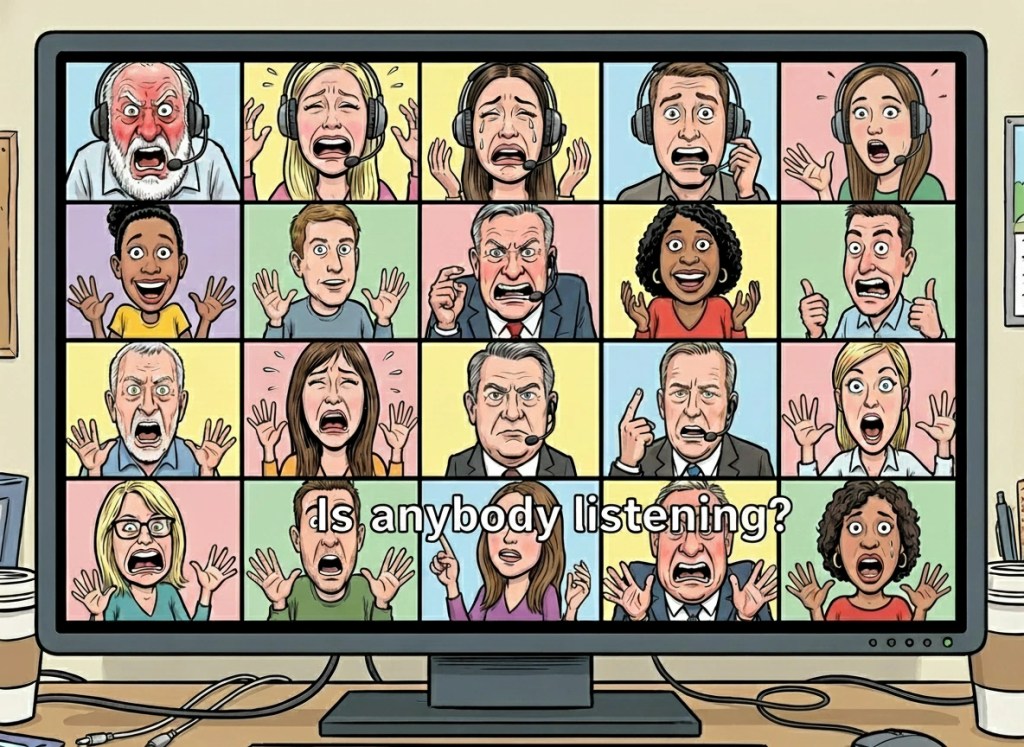
    There are probably a few posts about that coming up in the future. I’ll conclude with a simple question I’m sure so many of you have pondered: If everyone is talking? Is anybody listening?

  •                 “This used to be a place

                     Where a man could find some work

                     Put together Holdens or a foundry job at worst…”

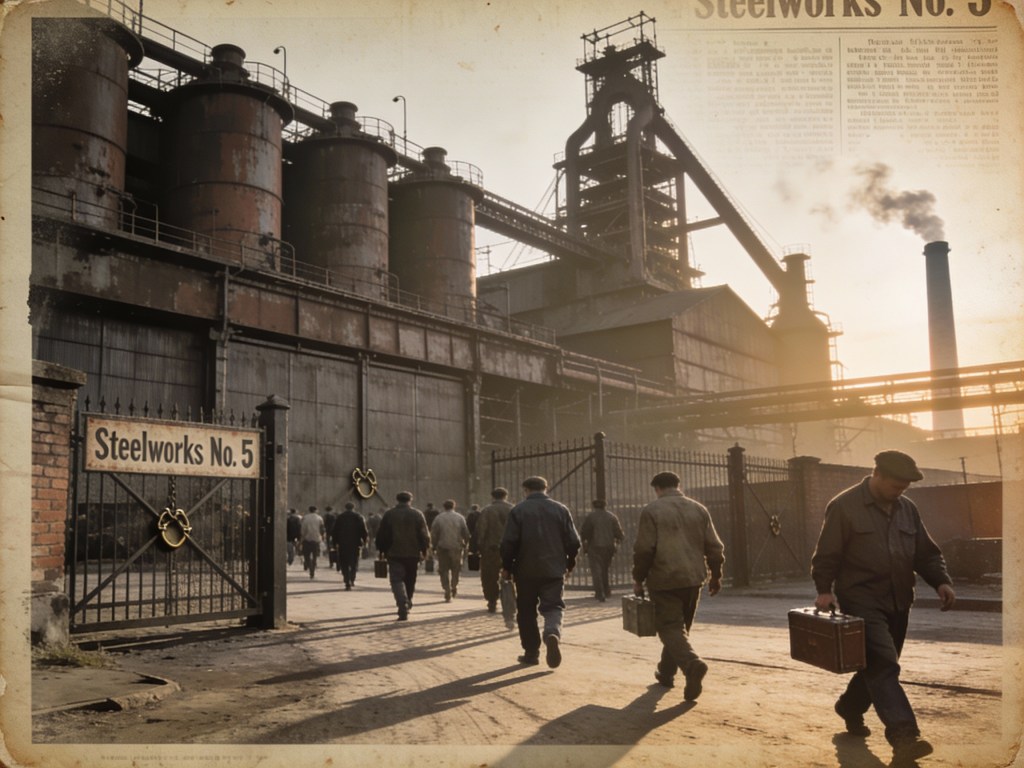
    Chorus

                    “They’re shutting down our town

                     They’re cutting down out town

                     No more production line blue collar can be found

                     They’ll tear it to the ground…”

    “Shutting Down Our Town” Jimmy Barnes

    Most of us like to think we can look after ourselves and hopefully take care of our nearest and dearest. Even a dole bludging ‘houso’ will convince themselves that the handouts are a right they are entitled to regardless of the legitimacy of their dependence. Some may have enough gusto to boost their income through shady means, but they don’t have the desire to go full criminal. Let’s just say this lot are not exactly go-getters.

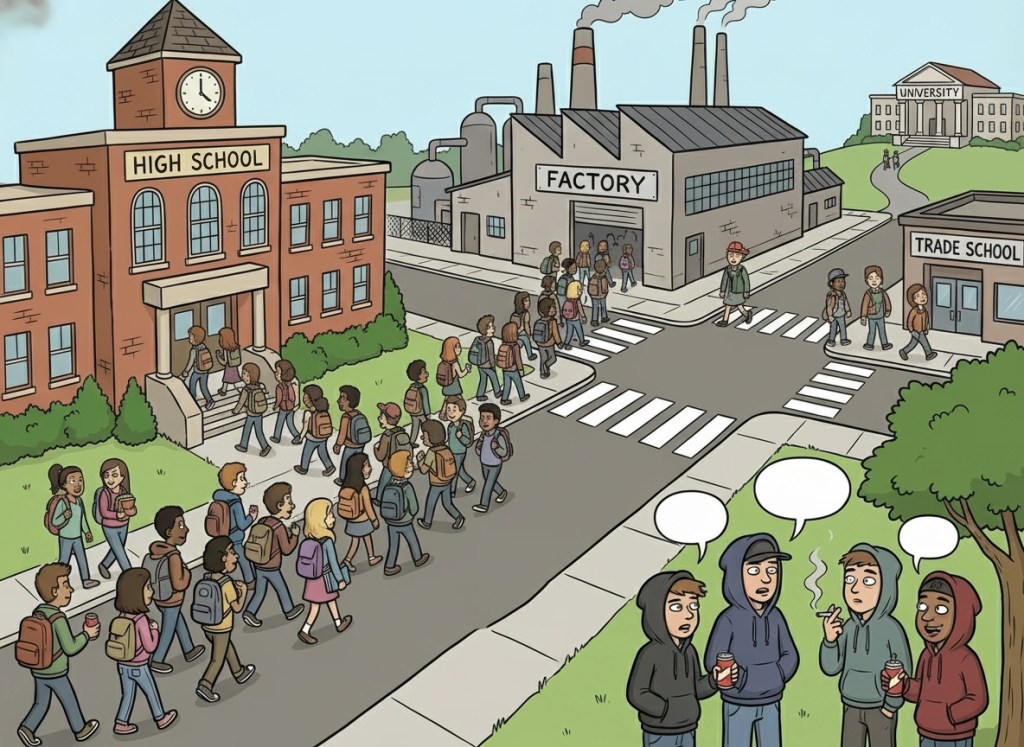
    The overwhelming majority of us go out and get a job. We don’t like it but “it’s an honest living”. To me a ‘job’ pretty much guarantees working for someone else. I mean this in the sense of unskilled labour. Where most of the slackers with no marketable skills end up. The ones who struggled or just cruised through school with no desire for higher education and not enough foresight or aptitude to get a trade – and no desire to go full criminal.

    The ones who did take their education seriously and actively pursued a profession may end up with a career – they may also end up with a ‘white collar job’. Career is a fascinating idea to me, and I will be delving into it more later. For this post let’s just settle for people pursuing further education hoping to earn a higher wage or simply avoid grunt work.

    Others may take the punt and choose to follow their passion or dream – artists, musicians etc. Some may stumble onto a good wicket – ‘it’s not what you know, it’s who you know’. A bullshit job that pays great. Some will choose to go full criminal.

    I don’t have the statistics, but I’ll hazard a guess that a shitload of all these people work for someone else – including the criminals. Most doctors and lawyers work for a hospital or firm. A tradie can work for himself, but a lot don’t. You could mow lawns for cash…fucken hell! That’ll do.

    So why the song lyrics at the top? Well, my point is this: we hate big business, but most of us are beholden to them (I like that that word has holden in it). Even if you don’t work directly for a corporation, chances are that your livelihood relies on getting paid from people who do.

    You’re self-employed, you own a coffee shop. Where do your customers get their money from? That song and many others (a lot from Bruce Springsteen) tell the tale of the devastating effect of being deserted by big business. Yes, it fucken sucks ass! But in this system, they are the backbone.

    Workers may sneer at the dole bludgers, especially when it dawns on them that their taxes provide the means for these job dodgers to get paid. This will definitely be getting a page of its own. The comparison I am drawing here is that while the welfare recipients (both genuine and fraudulent cases) are at the mercy of the government, most of the workers are way too complacent regarding the security of their situations.

    I do not want to try and squeeze too many ideas into one post, so rest assured I will be going down multiple rabbit holes as we move on. I just want to point out that the rug can be pulled quite suddenly for anyone, but the lower the skill level of the job the more precarious the position.

    If your job can be moved to a country with pissweak labour laws, it probably will. If a machine can do your job and the investment means no more annoying employees, guess what? The industry you’re in becomes redundant or not profitable enough, sayonara. Bosses are incompetent or embezzlers, sorry. Powerful union shrunk profit margins a little too much – shut the gates.

    For better or worse we rely heavily on entrepreneurs and the businesses they create, and I highly doubt anyone embarks on such a risky venture and decides to split the profits evenly with their employees – The utterly insane wage gap is a topic for later.

    Most of us sleepwalk out of school into a job. Some have the foresight to get themselves skilled up with the hopes of getting a higher paying and more resilient job; some even have a ‘dream job’ and thus are satisfied with what they do. So, moving backward along that list: a few people like or even love their job; many others would prefer not having to do it, but they’re pleased with what they earn; the majority are unhappy or outright hate their jobs.

    The common thread is simply this – they pretty much all ‘need’ their jobs and would be most upset if they lost it. A very cruel paradox indeed.