I would like to continue regarding generation X in Australia and our limited fact checking ability. This time I am curious about the potential gullibility this creates. I cannot personally remember ever being so eager for proof of something that I went trolling through the library referencing system (don’t get me started). I am sure I could have asked the librarian for help, but I never felt the urge.
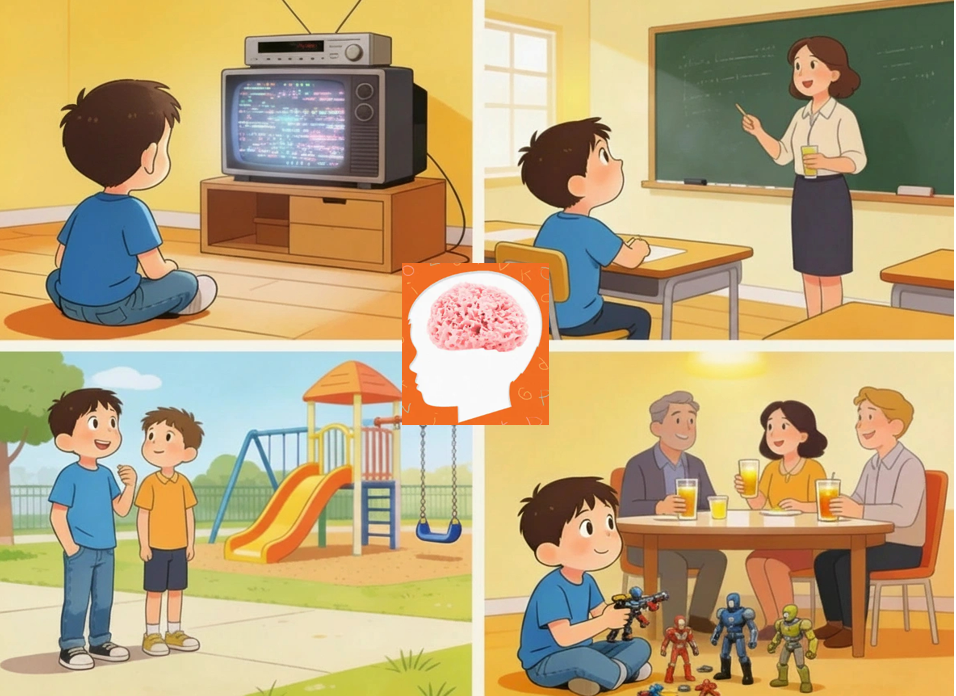
We all watched the same 4 (5 if you have good enough reception) channels and if something is reported on all the news broadcasts, for us kids anyway, that was that. It was in the newspaper; it must have happened. I have no memory of any major discrepancies leading to rival news outlets debating a major event. ABC had ‘News Watch’ which was supposed to be some type of watchdog, but cool kids only watch channel 2 for Monkey Magic or The Goodies!
Of course, the grown-ups often had their impromptu debates; especially when a few beers or wines had gone down. Occasionally a teacher would feel the need to share their opinion with the class and that might give you a different perspective and they would gladly help explain anything you needed help with. They probably provided a little more nuance than mum and dads assertions too.
The concept of Googling something to a kid back then is inconceivable! Most often we simply deferred to the grown up who spoke with certainty. Who could be assed scouring the library just to win an argument. As for researching current events back then, I struggle to imagine how we might have gone about it besides newspapers and magazines, which would leave substantial gaps in any subsequent report. Not that anyone would be bothered to read it, mind you.
The 1980s equivalent of finding a fact on Google and showing it via your smartphone could take hours and would require access to a library, unless the argument is taking place in a residence affluent enough to have its’ own encyclopaedia. It wouldn’t be practical to carry a volume with you just to prove your point; those things were big! So, you are left with finding the page/s proving your thesis, paying for photocopies and then tracking down the person who disagreed with you and hoping they still recall the conversation.
Even documentaries were rare back before cable television. I remember seeing them now and then; sometimes they were even the thing to watch that night! ABC and SBS would have had plenty and you knew one was coming whenever you saw that massive clunky video player getting wheeled out in school. I also remember sitting in the assembly hall watching film reels on a hanging white screen.

The only other way to see the weird and wonderful stuff around the world without going there was the video shop. They usually had a documentary section (or shelf). There you could find old films from David Attenborough, Jacques Couteau, or our very own Alby Mangels. The lack of fact checking ability left us wide open to bullshit though and I think there will always be another scandal or lie waiting to surface.
Needless to say, the most popular tapes were the more controversial ones about serial killers and perverts; these were the ones recommended in the playground at school. Accuracy was not as important as shock value. This stuff infiltrated our brains as facts.
Movies like Mondo Cane (1962) displaying bizarre and macabre rituals and behaviour taking place in exotic foreign lands were accepted without doubt. Even horror movies about cannibalistic tribes isolated from civilisation planted seeds of belief. Films such as 1980s Cannibal Holocaust (arguably the first horror film to use the found footage technique) gave young minds a sense of legitimacy to these gruesome tall tales.
Big media and the government had a much firmer hold on what ‘news’ and/or information we got access to. They controlled what movies were released in cinemas and/or on video, along with the authority to edit what they disapproved of. It was mostly hardcore porn and video nasties (ultra-violent stuff) that got banned, but we were none the wiser.

The same went for music which was more controlled by radio stations and record stores. They had the power to promote or bury whatever they preferred; this included stand-up comedy and any other kind of spoken word or performance albums.
It was always so cool when someone you knew came back from overseas with a movie, a record or cassette or maybe a computer game that was banned or just unavailable in Australia. Some things just didn’t get released here. Not because they were banned, just because nobody bothered.
These were the kind of treasures that could only be found at ‘some shop in Chinatown’ or ‘this bloke at Paddy’s Markets’. These ‘underground’ copies had a way of turning up! I can’t recall Chinatown, but I certainly found a few bootleg videos at Paddy’s Haymarket, which was right next door, by the way.

I am still amazed at the capability of the internet in finding obscure music and films. It’s a bit of a pity that kids today are incapable of appreciating the awesome wizardry that is smart phones and the internet!
That’s enough. I feel old now.
 MINDLESS MUSINGS
Leave a comment