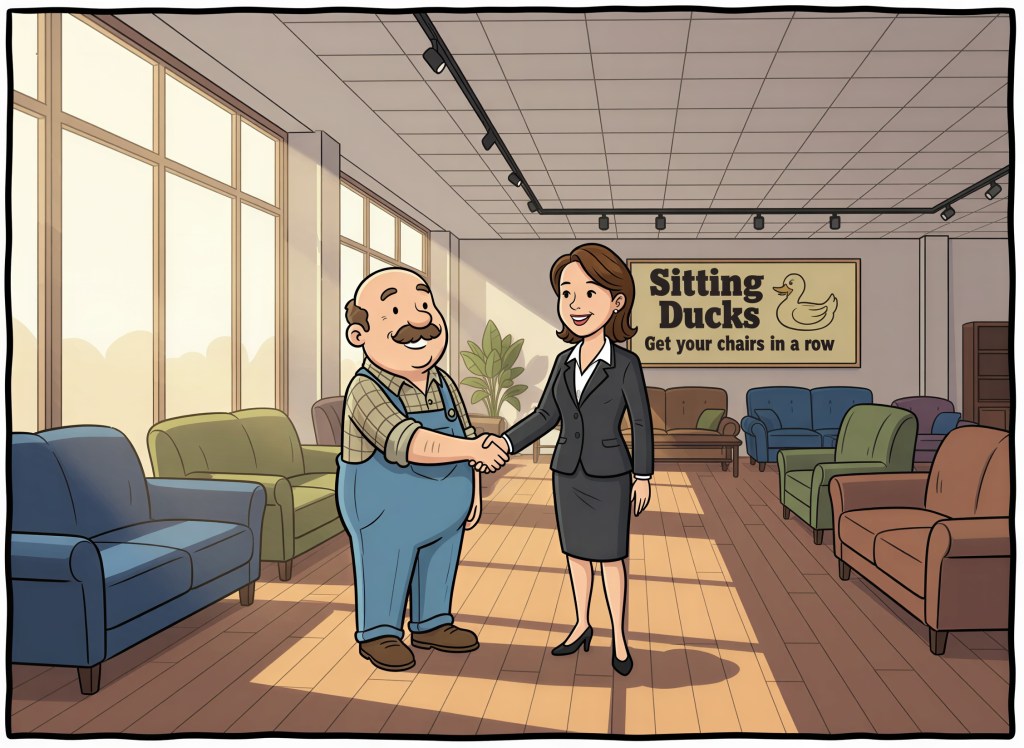
Joe just secured a contract with a national retail chain. Demand for his chairs has now risen sharply! Not only will they take any surplus he has now, they can also easily absorb as many as Joe and #2 can turn out from now on. It’s time for our entrepreneur to do some calculations.
Joe is sitting in a business sweet spot, but he must keep his big new customer happy. It would be foolish to cease providing inventory to the small stores that helped him get started, which make for about half of his present sales; the rest are sold online and are a bit of a pain logistically. He decides to put that side of his service aside for the time being and focus on keeping the stores in stock and on side.
After talking to his accountant, solicitor and bank manager Joe realises he needs to do some market research and projections. Joe has no clue about this and will need to hire and spend time with a consultant or firm. The time he saves not fumbling around with a webpage and completing tiny orders will allow him to shuffle things around and get to appointments. However, there is no denying that he can no longer spend as much time making chairs as he used to.
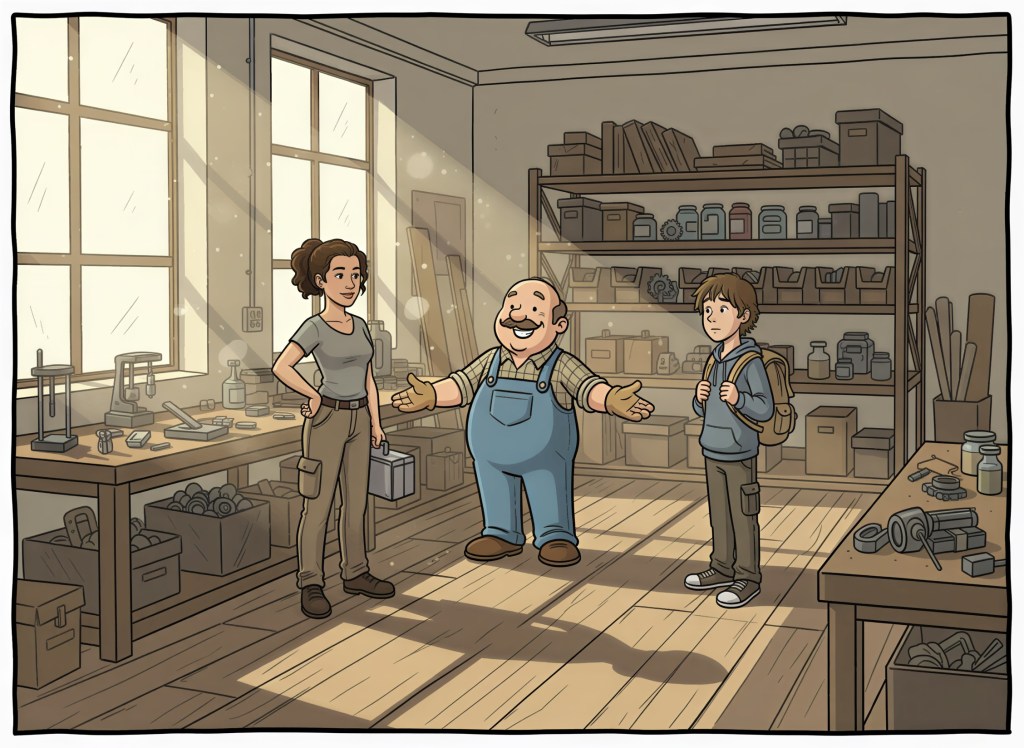
This means that #2 is in line for a nice promotion and a raise in pay. After advertising positions, Joe has opted for hiring 2 new employees: #3 is another skilled woodworker with her own tools and she will start on #2’s original wages. #4 is a young trainee fresh out of school, so Joe will pay him minimum wage until he gets more proficient. Of course, the kid will be much less productive that the two skilled workers and he will also need to have tools provided.
Joe has a few numbers to crunch before applying for that business loan:
- He has to fork out for the solicitor, accountant and Market Research.
- He must purchase a set of tools for his trainee
- He needs to invest in some extra machinery (band saw, lathe etc.) now that more people will be needing them.
- The inventory is going to need bulking up and regular restocking.
- All the insurance, superannuation and what not needs to be paid up.
On the other hand, he knows the demand is not limitless, nor is it guaranteed to last, so after all the research and equations are done it’s still a gamble. Joe takes on this risk along with the odds his new hires are good ones. Yes, he will be leaning on #2 more, but that is the purpose of the promotion, another punt for Joe. Will #2 be an effective supervisor?
This is yet another diversion of the owner/employee path. #2 has not been asked to share the financial risks and ultimate decisions regarding the future of the business. Being given more responsibility does not equate to being a partner or shareholder. Even if Joe turns out to be a nagging pain of a boss and calls #2 all hours expecting help, he still has the right to pocket the biggest piece of the pie.
Whatever Joe offers #2 is just that – an ‘offer’. That is the moment #2 needs to be very curious about what his new duties will be and how he will be compensated. If there is an actual contract involved, he also needs to ensure there is a review period for him, not just Joe. When things get hectic and possibly heated, that agreement will be very important.
For the purpose of this story, we’ll assume Joe is a generous and honest employer. He and #2 work out a pay rise and use of the company van etc. Joe will pay for #4 to get carpentry training and #2 is responsible for his on-the-job training, along with allocating and supervising his and #3’s daily tasks.
Moving forward, #2 is going to be replacing Joe in the workshop whenever he is away. Joe will still be in most days helping production, but he now must be ready to take care of any issues or enquiries his big new client may have. He is also going to have to do some learning himself on the business and marketing side of things.
From my own experience I am certain that #2 is going to feel a lot more stress and I wish him well. Joe is going to have his hands full and will obviously be expecting #2 & #3 to be turning out the 10 chairs a week quota very soon. With himself and #4 chipping in he would be hoping for 15 at least.
For now, he’ll be sticking to paying an hourly wage. Mostly because changing things to piecework would mean a whole new batch of paperwork and confusion and he just wants to get his new employees into the groove.
I won’t turn this tale into a business ledger, so I’ll end it here. It’s given me a clearer idea of the owner’s POV. Like the tribes in my other thread though, things become increasingly complicated once the growth hits a certain point. Time will tell.
 MINDLESS MUSINGS
Leave a comment