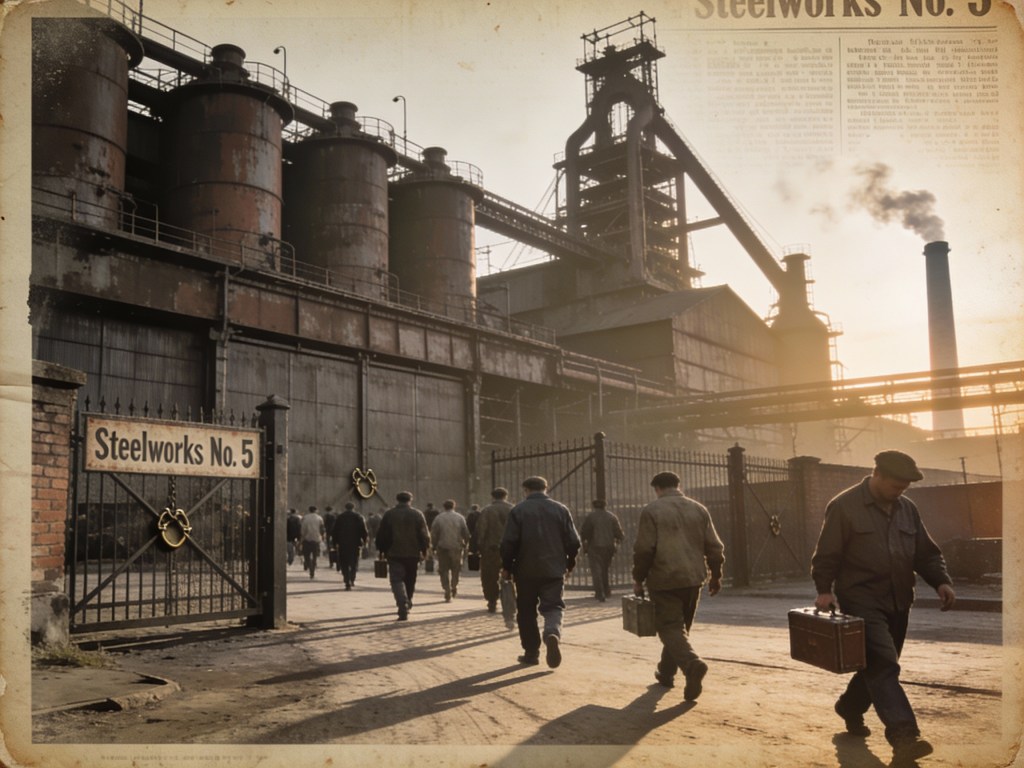
“This used to be a place
Where a man could find some work
Put together Holdens or a foundry job at worst…”
Chorus
“They’re shutting down our town
They’re cutting down out town
No more production line blue collar can be found
They’ll tear it to the ground…”
“Shutting Down Our Town” Jimmy Barnes
Most of us like to think we can look after ourselves and hopefully take care of our nearest and dearest. Even a dole bludging ‘houso’ will convince themselves that the handouts are a right they are entitled to regardless of the legitimacy of their dependence. Some may have enough gusto to boost their income through shady means, but they don’t have the desire to go full criminal. Let’s just say this lot are not exactly go-getters.
The overwhelming majority of us go out and get a job. We don’t like it but “it’s an honest living”. To me a ‘job’ pretty much guarantees working for someone else. I mean this in the sense of unskilled labour. Where most of the slackers with no marketable skills end up. The ones who struggled or just cruised through school with no desire for higher education and not enough foresight or aptitude to get a trade – and no desire to go full criminal.
The ones who did take their education seriously and actively pursued a profession may end up with a career – they may also end up with a ‘white collar job’. Career is a fascinating idea to me, and I will be delving into it more later. For this post let’s just settle for people pursuing further education hoping to earn a higher wage or simply avoid grunt work.
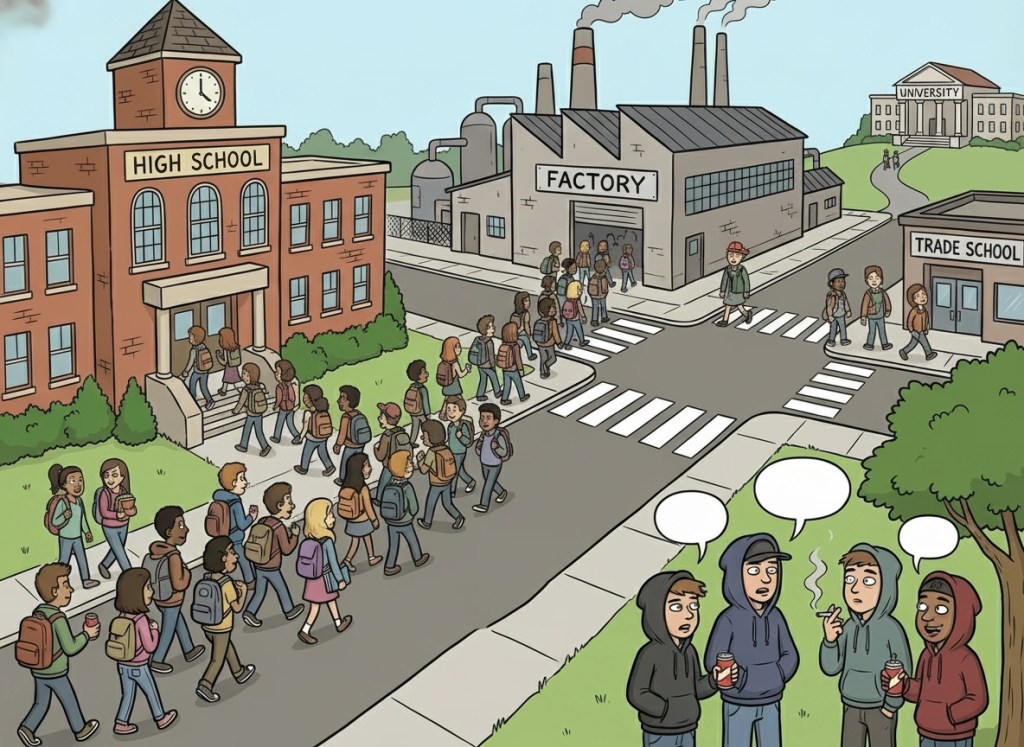
Others may take the punt and choose to follow their passion or dream – artists, musicians etc. Some may stumble onto a good wicket – ‘it’s not what you know, it’s who you know’. A bullshit job that pays great. Some will choose to go full criminal.
I don’t have the statistics, but I’ll hazard a guess that a shitload of all these people work for someone else – including the criminals. Most doctors and lawyers work for a hospital or firm. A tradie can work for himself, but a lot don’t. You could mow lawns for cash…fucken hell! That’ll do.
So why the song lyrics at the top? Well, my point is this: we hate big business, but most of us are beholden to them (I like that that word has holden in it). Even if you don’t work directly for a corporation, chances are that your livelihood relies on getting paid from people who do.
You’re self-employed, you own a coffee shop. Where do your customers get their money from? That song and many others (a lot from Bruce Springsteen) tell the tale of the devastating effect of being deserted by big business. Yes, it fucken sucks ass! But in this system, they are the backbone.
Workers may sneer at the dole bludgers, especially when it dawns on them that their taxes provide the means for these job dodgers to get paid. This will definitely be getting a page of its own. The comparison I am drawing here is that while the welfare recipients (both genuine and fraudulent cases) are at the mercy of the government, most of the workers are way too complacent regarding the security of their situations.
I do not want to try and squeeze too many ideas into one post, so rest assured I will be going down multiple rabbit holes as we move on. I just want to point out that the rug can be pulled quite suddenly for anyone, but the lower the skill level of the job the more precarious the position.
If your job can be moved to a country with pissweak labour laws, it probably will. If a machine can do your job and the investment means no more annoying employees, guess what? The industry you’re in becomes redundant or not profitable enough, sayonara. Bosses are incompetent or embezzlers, sorry. Powerful union shrunk profit margins a little too much – shut the gates.
For better or worse we rely heavily on entrepreneurs and the businesses they create, and I highly doubt anyone embarks on such a risky venture and decides to split the profits evenly with their employees – The utterly insane wage gap is a topic for later.
Most of us sleepwalk out of school into a job. Some have the foresight to get themselves skilled up with the hopes of getting a higher paying and more resilient job; some even have a ‘dream job’ and thus are satisfied with what they do. So, moving backward along that list: a few people like or even love their job; many others would prefer not having to do it, but they’re pleased with what they earn; the majority are unhappy or outright hate their jobs.
The common thread is simply this – they pretty much all ‘need’ their jobs and would be most upset if they lost it. A very cruel paradox indeed.
 MINDLESS MUSINGS
Leave a comment